Art Integration Activity
TOPIC- Maharashtra and Sikkim's Cultural Heritage...
What is Cultural Heritage?

Our Heritage.
 |
| Our Heritage. |
Cultural heritage includes artefacts, monuments, a group of buildings and sites, museums that have a diversity of values including symbolic, historic, artistic, aesthetic, ethnological or anthropological, scientific and social significance. It includes tangible heritage (movable, immobile and underwater), intangible cultural heritage (ICH) embedded into cultural, and natural heritage artefacts, sites or monuments. The definition excludes ICH related to other cultural domains such as festivals, celebration etc. It covers industrial heritage and cave painting.
1. Cultural Heritage Of Maharashtra:

Art and Architecture of Maharashtra:


Maharashtra, a dynamic state in western India, boasts a wealth of architectural wonders that have evolved over centuries, reflecting the legacy of various civilizations. The state’s diverse and rich heritage is evident in the variety of architectural styles and structures found across its landscape, from ancient rock-cut caves and imposing forts to magnificent temples and colonial-era buildings. Each architectural style encapsulates the region’s historical, cultural, and geographical influences, merging local traditions with outside inspirations.
Monuments in Maharashtra:

Maharashtra is a state renowned for its rich historical and cultural heritage. With a history that stretches back thousands of years, Maharashtra boasts a plethora of historical monuments that attract tourists worldwide. Each monument is recognized for its heritage value, architectural and worldwide popularity. Discover the rich heritage of Maharashtra through its top historical places. From majestic forts and ancient temples to colonial structures, these historical monuments offer a glimpse into the region's glorious past. Immerse yourself in the captivating stories and architectural marvels, making Maharashtra a treasure of historical wonders.
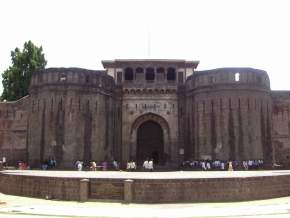
Shani war Wada...
Built by the King Baji Rao in 1730, Shani war Wada was the palace of the great rulers Peshwa Dynasty in Pune. The mammoth structure was destroyed in a big fire in 1827 but the walls survived the fire. The palace became the Centre of Indian politics in 18th century following the rise of the Maratha Empire. The ceremonial foundation of this palace was laid by Peshwa Baji Rao I, the king of the Maratha Empire. It was named Shani war Wada from the Marathi words Shani war which means Saturday and Wada is a general term for any residence complex.
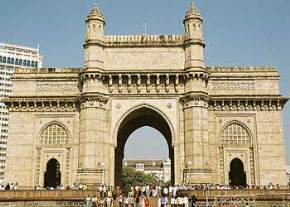
Gateway of India...
Gateway of India represents Mumbai. This iconic structure stands on the sides of sea in South Mumbai. The architecture of Gateway of India is a replica of architecture of Indo-Saracenic time. This is the first place visited in Mumbai by any tourist. The architecture of the monument is a true combination of Hindu and Muslim architecture, the arc is in a Muslim style and its decoration is in a Hindu style. It was built in December 1911 to celebrate the King George V and Queen Mary’s visit to Bombay. The structure is built in yellow basalt and reinforced concrete. The stone was brought from Gwalior.
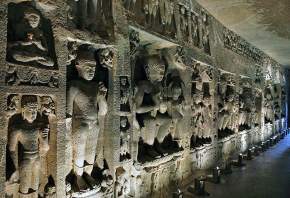
Ajanta Caves...
The Ajanta Caves are the must see attraction for the tourists in Aurangabad but it is located at 106 km away from Aurangabad. “Chaitya Griha's” and “Viharas” are the two most common names given to the crucial design of the caves. To know the famous Buddhist legends during 200 BC and 650 AD, one should study the Ajanta Caves thoroughly. These caves are a cluster of 30 caves among which five are Buddhist churches and the left 25 are monks’ residence. Among the two designs, “Chaityas” are big-sized and shaped in rectangular chambers; each distinguished by an array of pillars whereas “Viharas” are big rectangle.
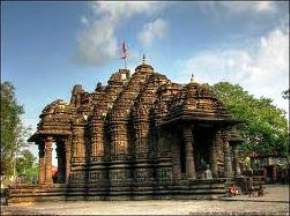
Ambarnath Temple...
Located near the small hill town of Matheran, this ancient temple is dedicated to Lord Shiva and is a popular religious shrine of the region. The temple is believed to be constructed in 1060 by King Mahama Daleshwar as a tribute to his ancestors and is known for its resemblance with the famous Dilwara Temples of Mount Abu in Rajasthan. The main attraction of this shrine is the marvelous architectural designs carved on the walls and ceilings that grab the attention of the visitors. A fair is celebrated annually on the occasion of Shivaratri in the temple premises that houses crowd of locals and the tourists from the other parts of state.
2. Cultural Heritage Of Sikkim:

Art and Architecture of Sikkim:
The Government of Sikkim is making constant efforts to keep the arts & crafts alive. Keeping the idea in mind, the Govt. has established Handicraft and Handloom Institute, to preserve and promote traditional cottage art and craft of genuine Sikkimese design. The institution is a reservoir of eye-catching handicraft and handlooms like carpets, wood carved furniture, thangkas and canvas wall hangings. Sikkimese carpets are especially known for being hand knotted with artistic designs. The handicrafts of Sikkim have a kind of appeal in them, whether it is fantastic woven carpet or amazing 'Choktse' table, everything is just wonderful.
 |
.jpeg)
- Lepcha Houses: Built primarily with bamboo and wood, these homes are raised on stilts to protect against flooding.
- Bhutia Houses: Constructed with stone and wood, these houses have flat roofs and small windows to keep out the cold.
- Nepalese Influence: The Nepalese introduced their own building styles, adding another layer to Sikkim’s architectural mosaic.
Monuments in Sikkim:
.jpeg)
1.Rabdentse Ruins-

2.Rumtek Monastery-

Being perched on a hill overlooking Gangtok, Rumtek monastery is one of Sikkim’s most significant and largest monasteries. You can enjoy a spiritual sojourn at this place and discover inner peace by spending some time here. The monastery was built in the 16th century and is also renowned as Dharma Chakra Centre. It is one of those monasteries of India that was built with traditional architectural designs. Hence, Rumtek Monastery always finds its place in the list of famous monastries of Sikkim. This monastery preserved many eye-catching factors that will grab your attention at one glance. Here you can find a golden stupa and several sculptures belonging to the 16th Karmapa.
3.Siddheshwar Temple-

Siddheshwar Dham, also known as Char Dham Temple, is a Hindu temple located on Solo Phok Hill near Namche in Sikkim. The temple complex features a 108-feet high statue of Lord Shiva and replicas of the four Char Dham temples (Badrinath, Jagannath, Dwarka, and Rameshwaram) and twelve Jyotirlingas. This pilgrimage-cum-cultural center has become a popular tourist destination, attracting devotees and visitors alike. In addition to exploring Siddheshwar Dham, visitors can enjoy nearby attractions such as the Tendong Hill and Maenam Hill treks, Maenam Wildlife Sanctuary, Tendong State Biodiversity Park, and various monasteries including Ralang Monastery, Doling Gompa, Ngadak Monastery, and Serdup Choling Monastery. The majestic Padmasambhava Statue at Samdruptse Hill is also worth a visit.
4.Coronation Throne of Norbugang-

The Coronation Throne of Norbugang is one of the most visited historical places in Sikkim. It is the location of the crowning ceremony of Phuntsog Namgyal, the first king of Chogyal King. After the ceremony, Norbugang Chorten, a wall-like structure erected to give tribute to the king. A widespread rumor linked with this location is that the people who attended the ceremony offered great treasures. Moreover, they are believed to be buried beneath the Norbugang Chorten. This historical site also has the seats of 3 lamas and kings, which are considered the eye-catching attractions of this place.
5.Dubdi Monastery-

Dubdi Monastery is one of the prime monasteries and historical hotspots in Sikkim. It is widely known as Yuk sum and belongs to the Nyingma sect of Tibetan Buddhism. Being established in 1701 by Chogyal Namgyal, Dubdi is counted as one of the oldest monasteries of Sikkim. Therefore, exploring this monastery is a lifetime experience as you can encounter fascinating attractions of the past. You can admire the painted interiors and discover some ancient artworks of divinities. In short, visiting this monastery will give you an incredible experience and memories you can cherish for a long time.
- A people without the knowledge of their past history, origin and culture is like a tree without roots.


No comments:
Post a Comment